
The REEDS program · skill 2 of 5
Engage. Build trust through real human connection.
When a draft of anything is a prompt away, attention becomes the scarce thing. Engage is the skill of being present with another person, listening well, and building trust that lasts.
Book an intro call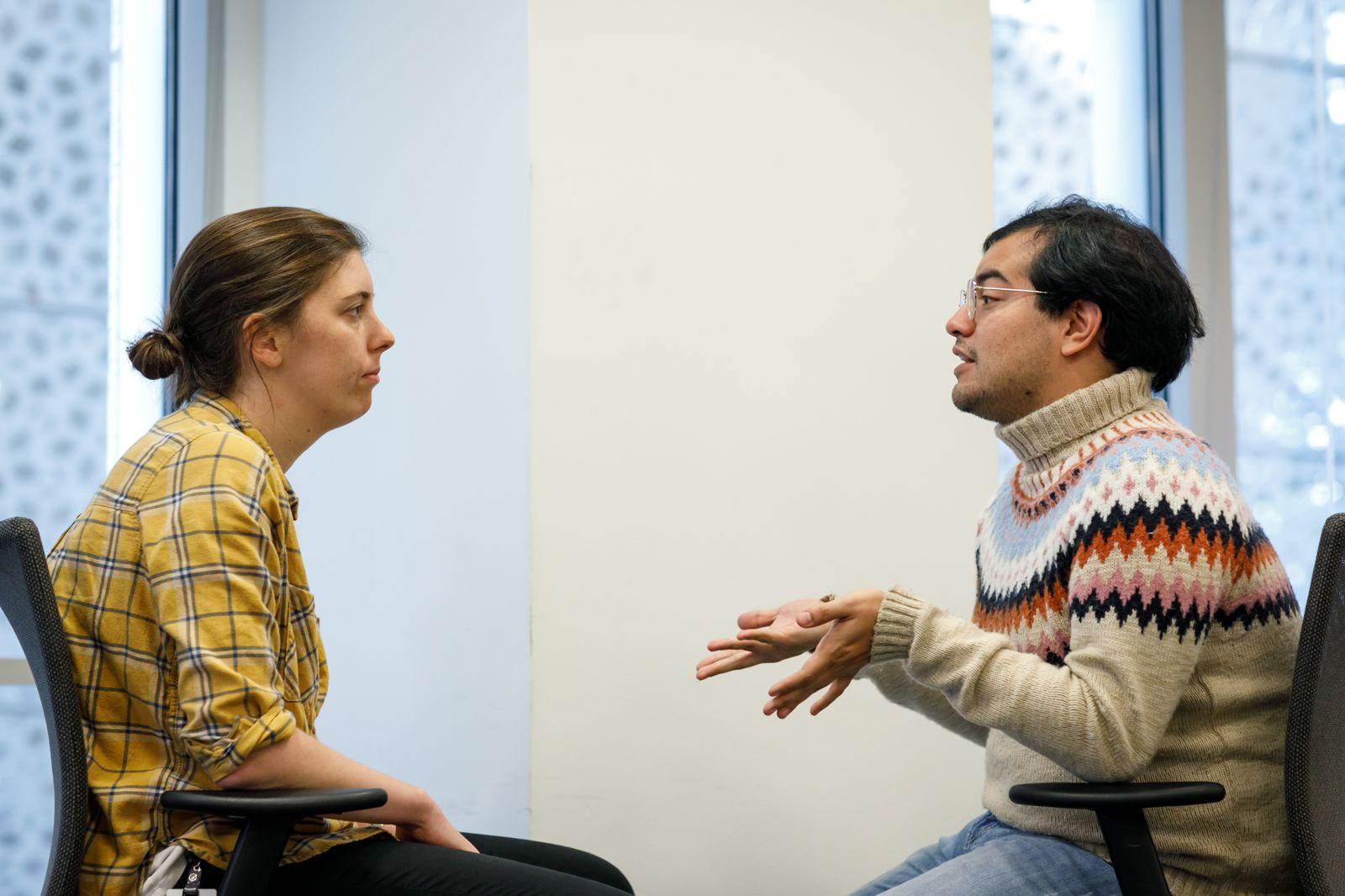
What Engage means.
Engage is about connection. It covers how you communicate and listen, how you coach someone to their own answer, and how you build relationships and influence across an organization.
It draws on the group of capabilities MIT Sloan researchers describe as presence, networking, and connectedness.
It also lines up with what Harvard researchers saw in leaders who did well with both AI agents and people: they asked more questions and took turns in conversation.
Why Engage matters more now.
More work now happens between a person and a screen. The time people spend with each other matters more, not less.
Trust in managers has dropped.
Among the leaders DDI surveyed, trust in their own immediate manager fell from 46% in 2022 to 29% in 2024.
Source: Global Leadership Forecast 2025 (opens in a new tab). DDI, 2025.
Coaching and trust go together.
In the same survey, employees whose managers are effective coaches were nine times more likely to trust their manager.
Source: Global Leadership Forecast 2025 (opens in a new tab). DDI, 2025.
Manager support for AI goes with higher engagement.
In Gallup’s 2026 polling, employees who say their manager actively supports the team’s use of AI had an engagement rate of 48%, compared with 30% for those who do not say this.
Source: Employee Engagement Remains Flat as AI Adoption Accelerates (opens in a new tab). Gallup, 2026.
What Engage looks like at work.
Engage is the difference between a meeting people attend and a conversation people remember.
A one on one that is really a conversation
The manager closes the laptop, asks one good question, and lets the silence do some work before offering a view.
Coaching instead of fixing
A team member brings a problem. Instead of solving it, the manager asks what they have tried and what they think the next step is.
Influence without authority
A leader needs another function to change its plans. They start with what that team cares about, not with the ask.
Engage at every level.
People learn a different side of Engage as they take on more responsibility. One topic per session.
Core · lead yourself
Communication and listening
People practice being clear, being brief, and listening to understand, in person and in writing.
The Core level →Manager · lead a team
Coaching
Managers learn to coach: ask questions that help people think, and resist the urge to hand over the answer.
The Manager level →Executive · lead the organization
Networking and influence
Senior leaders work on the relationships that move an organization, inside it and outside it.
The Executive level →
Curious what REEDS could look like for your team? Let's talk.
Book an intro call
A 30 minute call with Dave Collinsof Oak & Reeds Interactive Training
Not ready to book yet?
Leave a note and Dave will reply to you himself.