The REEDS program
Train the human skills AI makes more valuable.
REEDS is a people development program for the age of AI. It teaches people how to lead when AI is doing more of the work.
Book an intro call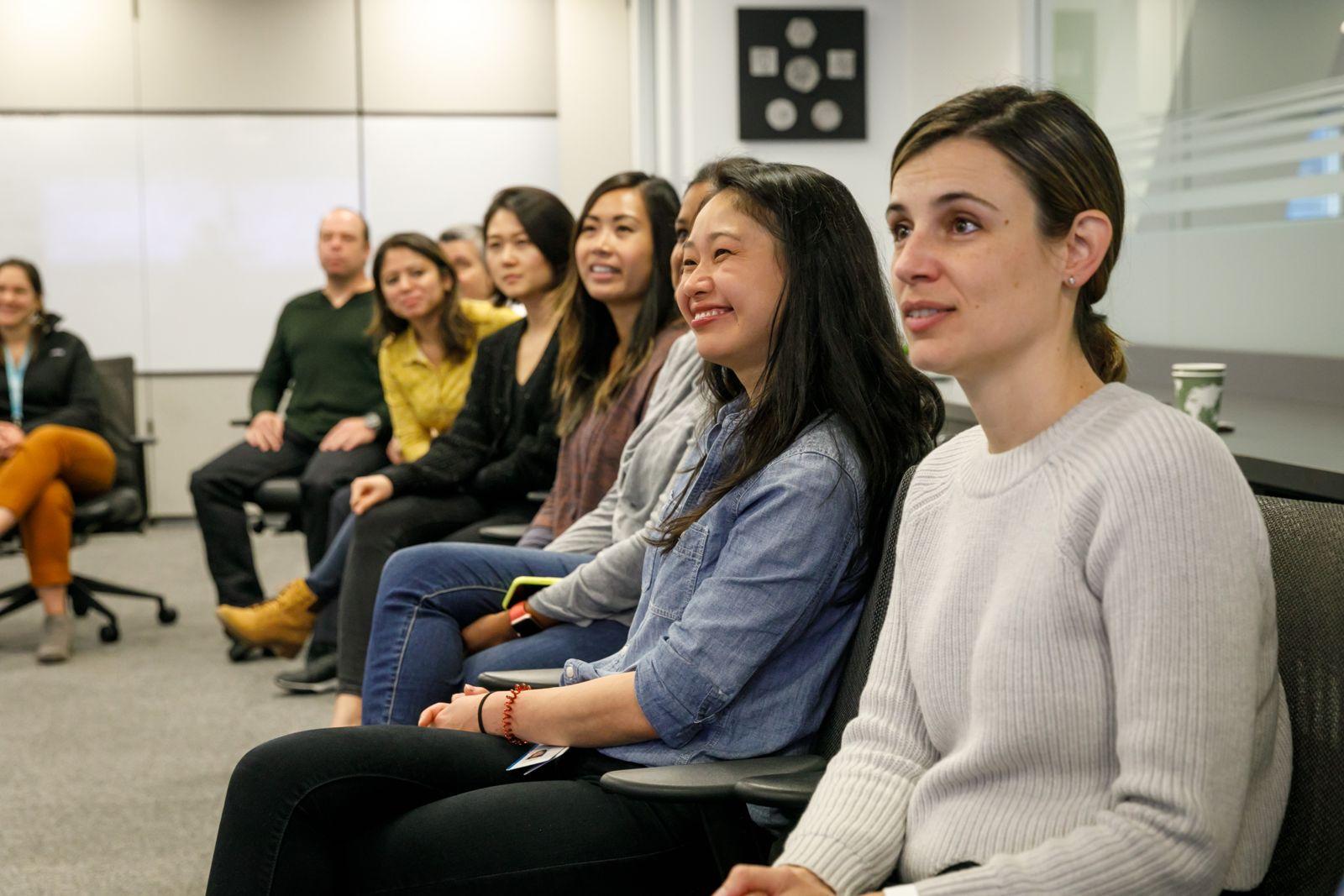
Five skills. One word to remember them.
REEDS stands for the five human skills that matter more as AI takes on more of the work.
- RelateUnderstand what people feel and need
- EngageBuild trust through real human connection
- EvaluateKnow what good looks like, and say so
- DiscoverStay curious and try new things
- SteerSet direction and bring people with you


Not sure where to start? Take the two minute team check →
The same five skills at every level.
People learn a different side of each skill as they take on more responsibility. Every level shares the same five words, so the whole company speaks one leadership language.
Executive
Lead the organization
The most senior leaders: directors, vice presidents, and the C suite
The Executive level →
| The skill | Core · lead yourself | Manager · lead a team | Executive · lead the organization |
|---|---|---|---|
| Relate | Adapting to changeHow to notice your own reaction to change and choose a useful response. | Emotional intelligenceHow to read what your people feel, including what goes unsaid, and respond in a way that builds trust. | Culture, values, and psychological safetyHow to build the culture and values that make it safe to speak up, ask, and experiment. |
| Engage | Communication and listeningHow to be clear, be brief, and listen to understand. | CoachingHow to ask questions that help people think, instead of handing over the answer. | Networking and influenceHow to build the relationships that move an organization, inside it and outside it. |
| Evaluate | Judging AI assisted workHow to check AI assisted work before you rely on it or pass it on. | Feedback on AI assisted workHow to give useful feedback when AI did part of the work, and hold a clear standard for good. | Decision making and ethicsHow decisions get made, who is accountable for them, and where the ethical lines are. |
| Discover | CuriosityHow to ask better questions and stay open when the first answer falls flat. | Brainstorming and Yes AndHow to run brainstorms that build on ideas, using the improv practice of Yes And. | ExperimentationHow to make room for small experiments, and treat what does not work as information. |
| Steer | StorytellingHow to make a point through a short, well built story. | Leading changeHow to lead a team through change: explain why, answer the hard questions, and keep people moving. | Strategic thinkingHow to step back from the day to day and choose what to bet on, and what to stop. |
- Relate
- Core · lead yourself
Adapting to change
How to notice your own reaction to change and choose a useful response.
- Manager · lead a team
Emotional intelligence
How to read what your people feel, including what goes unsaid, and respond in a way that builds trust.
- Executive · lead the organization
Culture, values, and psychological safety
How to build the culture and values that make it safe to speak up, ask, and experiment.
- Engage
- Core · lead yourself
Communication and listening
How to be clear, be brief, and listen to understand.
- Manager · lead a team
Coaching
How to ask questions that help people think, instead of handing over the answer.
- Executive · lead the organization
Networking and influence
How to build the relationships that move an organization, inside it and outside it.
- Evaluate
- Core · lead yourself
Judging AI assisted work
How to check AI assisted work before you rely on it or pass it on.
- Manager · lead a team
Feedback on AI assisted work
How to give useful feedback when AI did part of the work, and hold a clear standard for good.
- Executive · lead the organization
Decision making and ethics
How decisions get made, who is accountable for them, and where the ethical lines are.
- Discover
- Core · lead yourself
Curiosity
How to ask better questions and stay open when the first answer falls flat.
- Manager · lead a team
Brainstorming and Yes And
How to run brainstorms that build on ideas, using the improv practice of Yes And.
- Executive · lead the organization
Experimentation
How to make room for small experiments, and treat what does not work as information.
- Steer
- Core · lead yourself
Storytelling
How to make a point through a short, well built story.
- Manager · lead a team
Leading change
How to lead a team through change: explain why, answer the hard questions, and keep people moving.
- Executive · lead the organization
Strategic thinking
How to step back from the day to day and choose what to bet on, and what to stop.
One topic per session. No level is a prerequisite for another. Select any topic to see what the session covers.
How the program works.
In every session
- Practice one human skill
- Build one tool with AI
- Solve one real problem together
Between sessions
- Self led exercises on our portal
- Peer led coaching groups
- One on one check in guides for managers
Visible results
- Real time feedback from participants
- The tools people built
- Pulse survey results over time
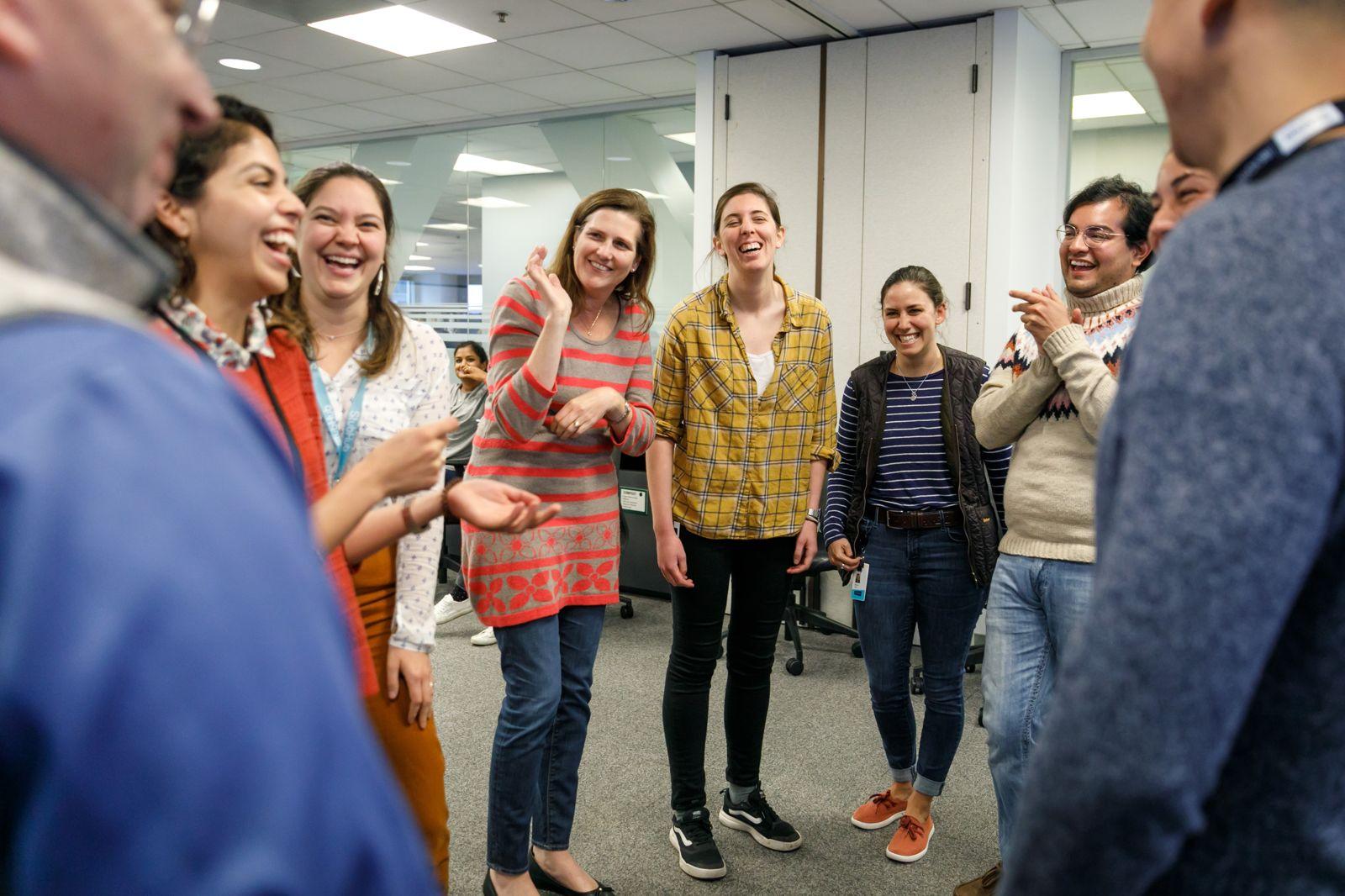
Sessions are live and facilitated, in person or virtual. Nothing is a recorded course.
Built for the people who have to make AI work.
If you lead AI adoption
The tools are in place. Now managers have to lead with them.
Managers learn to frame work clearly for AI, judge what comes back, and bring their teams along. Every participant leaves with tools built for their own team.
More for AI adoption leaders →If you lead learning and development
A full manager program that will not be out of date in six months.
REEDS is built on proven leadership content and organized around skills that hold their value as the tools change.
More for Learning and development leaders →If you lead HR
One shared leadership language, from individual contributors to executives.
Every level learns the same five skills, so what good leadership looks like is clear and consistent. That language can carry into how you manage performance.
More for HR leaders →
The research behind REEDS.
REEDS is our framework. It stands on two bodies of research, credited here.
70%
of the challenges in implementing AI come from people and process, in a survey of 1,000 senior executives.
Source: Where’s the Value in AI? (opens in a new tab). BCG, 2024.
2.1x
as likely to use AI a few times a week or more: employees who strongly agree their manager supports their team’s use of AI.
Source: Manager Support Drives Employee AI Adoption (opens in a new tab). Gallup, 2025.
51%
is where regular AI use among frontline employees has stalled.
Source: AI at Work 2025: Momentum Builds, but Gaps Remain (opens in a new tab). BCG, 2025.
MIT Sloan: the human capabilities that complement AI
Researchers Isabella Loaiza and Roberto Rigobón identify five groups of human capabilities that complement what AI does: empathy, presence, judgment, creativity, and leadership. REEDS is built on those five groups. They name improvisation and curiosity among them, and they argue these are not soft skills. In their words, they are “among the most challenging to cultivate and teach.”
Source: The EPOCH of AI: Human-Machine Complementarities at Work (opens in a new tab)
Harvard: leading AI agents and leading people
In a study of 249 leaders, Ben Weidmann, Yixian Xu, and David Deming found that “leadership skill with artificially intelligent (AI) agents predicts leadership skill with human groups.” The leaders who did best with both asked more questions and took turns in conversation.
Source: Measuring Human Leadership Skills with AI Agents (opens in a new tab)
Both are working papers. We cite them for the ideas, and we teach the skills.
Why Oak & Reeds.
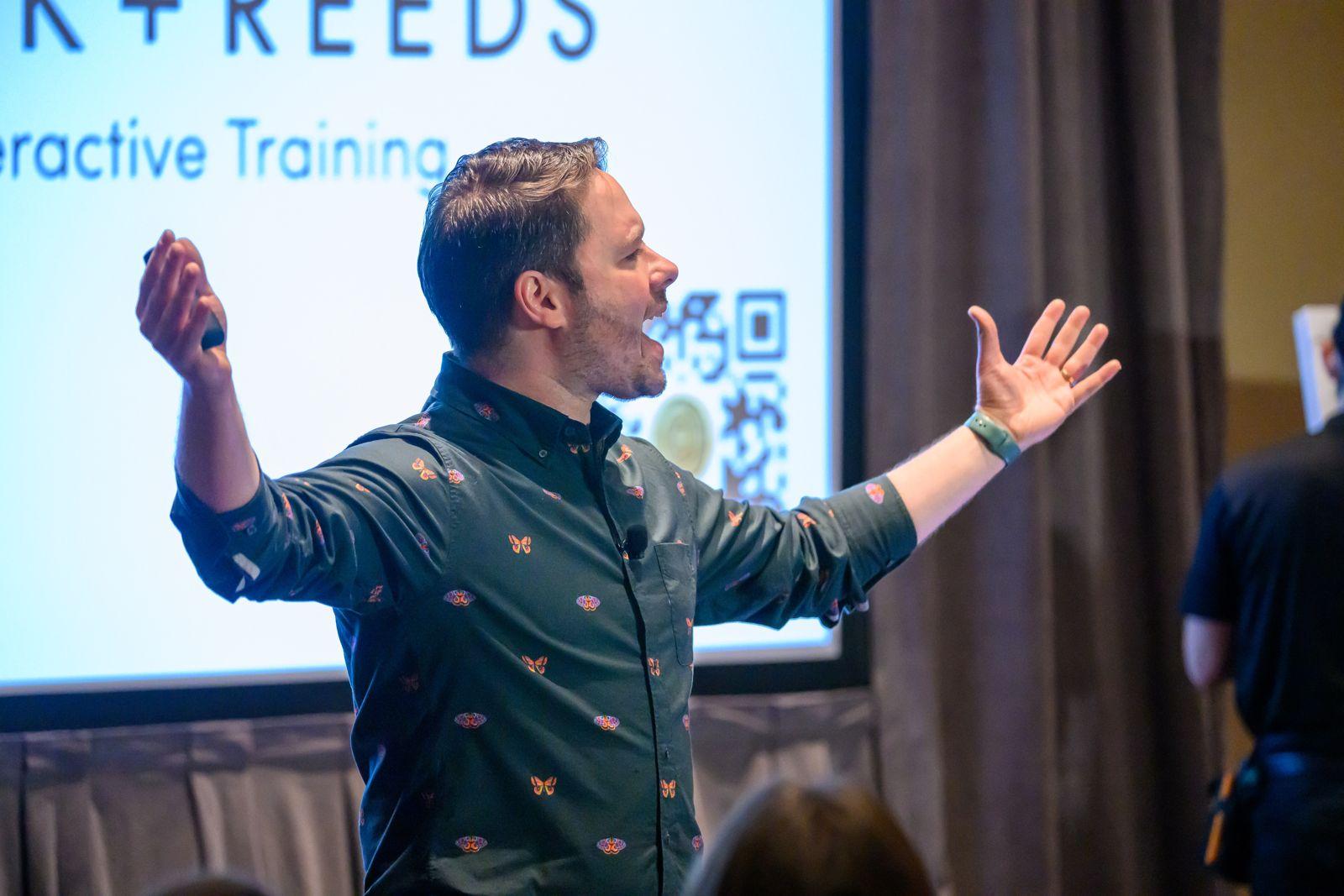
Improv is in the research
Oak & Reeds was founded to bring the tools of improv into the workplace. MIT now names improvisation as a human capability that is hard to achieve with logic alone.
Change management is built in
Adopting AI is a change project. REEDS teaches people to lead through change, and it is designed by a former change management consultant.
Proven results
A decade of interactive training delivered to teams at Google, TikTok, Nike, CBRE, and Stanford University.
Three ways to start.
Small
One level. Five sessions, one per skill
About three months
Medium
Two levels. Ten sessions
About six months
Large
All three levels, with a kickoff day
About nine months
Optional alongside any program: one on one speaker coaching and leader coaching.
Curious what REEDS could look like for your team? Let's talk.
Book an intro call
A 30 minute call with Dave Collinsof Oak & Reeds Interactive Training
Not ready to book yet?
Leave a note and Dave will reply to you himself.
Are you a coach or a facilitator?
We also make the software we run our own coaching and workshops on. Coach is for coaches who run a practice. Facilitate is for people who run workshops.